
Parenting & Learning
Little Hands, Green Planet
‘What green skills mean for our children, our families and our school’
- Dr. Manjit Legha
- Nov 11, 2026
Every morning, our children step into a world full of wonder: sunshine, rain, trees, birds, rivers and fields. This beautiful planet is their home, and one day it will be in their hands. As a NeuroGurukul school, we believe the best time to teach children how to care for the Earth is right now, while they are young, curious and eager to grow.
What are green skills?
Green skills are the things we know, do and believe that help us take care of the Earth.
Here is how we explain it to our young learners:
“The Earth is like a big home that we all share with plants, animals , birds, people and several other creatures. Green skills are the kind and clever things we do to keep our home clean, healthy and happy. When you switch off a light, save water, plant a seed or put waste in the right bin, you are using a green skill. You are being an Earth Helper!”
Green skills are not only about actions. They also include the way children think and feel: noticing Nature, asking “why?”, solving small problems, working together and caring about others, including animals, birds, insects and people they may never meet.
What does this mean for children and parents?
For children
Green skills turn everyday moments into small acts of care. They help children feel capable and proud, because even a five-year-old can make a real difference. They also build curiosity, responsibility, teamwork and kindness, qualities that serve children well in every part of life.
For parents
You are your child’s first and most important teacher. Children copy what they see. When they watch you carry a cloth bag, fix a broken toy instead of throwing it away, or switch off the fan before leaving a room, they learn that caring for the planet is simply “how our family does things.” Green habits also save money, reduce waste and bring families closer through shared activities like gardening, nature walks and cooking together.
Why should young children learn green skills?
- Habits formed early last a lifetime. Saving water or sorting waste becomes second nature when started young.
- Children learn best by doing. Planting, composting and recycling are hands-on, joyful ways to learn science, maths and language.
- It builds empathy. Caring for a plant or a bird teaches children to care for living beings beyond themselves.
- It gives hope, not fear. Instead of worrying about big problems, children learn that their actions help.
- It prepares them for the future. Tomorrow’s world will need people who can think creatively about energy, water, food and nature.
How can children practise green skills every day?
Green skills are easy to fit into daily life. Here are simple ideas to begin with, for home and school:
- Save water: turn off the tap while brushing teeth and take only as much water as you will drink.
- Save energy: switch off lights, fans and screens when they are not needed.
- Reduce, reuse, recycle: use both sides of paper, reuse jars and boxes for crafts, and sort dry and wet waste.
- Love your food: take small portions, finish what is on the plate and compost peels.
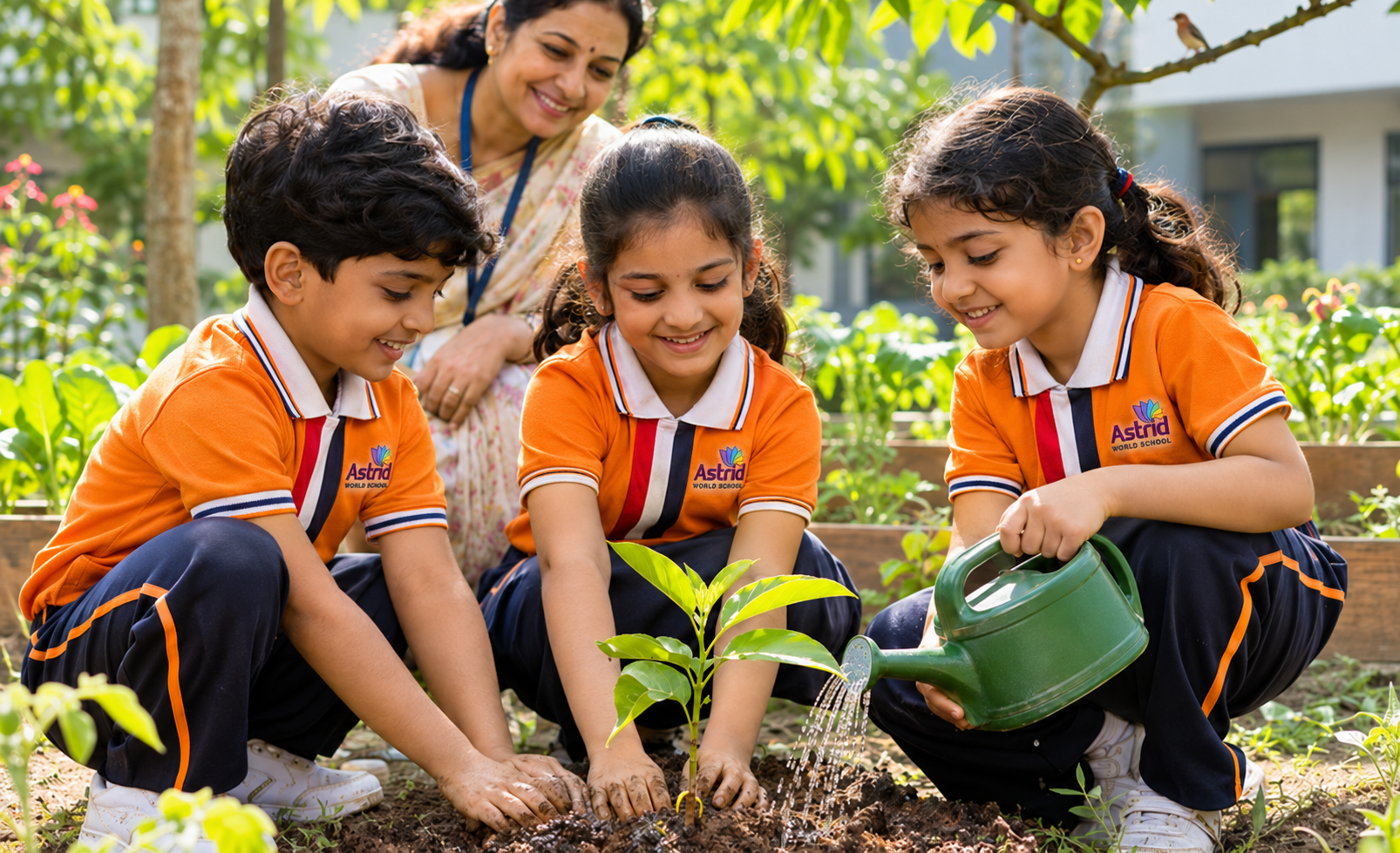
- Grow something: a tulsi plant, a pot of herbs or a classroom garden. It teaches patience and responsibility.
- Say no to single-use plastic: carry a steel bottle, a lunch box and a cloth bag.
- Explore nature: go on walks, watch birds and insects, collect fallen leaves and talk about what you see.
- Walk, cycle or share: for short distances, leave the car at home or carpool to school.
The bigger picture: green skills and the SDGs
In 2015, countries around the world agreed on 17 Sustainable Development Goals (SDGs), a shared plan to make the world fairer, healthier and greener by 2030. We tell children these are the “17 promises the world made to take care of people and the planet.”
Every small green action a child takes connects to these big global goals:
Global Goal | A green skill a child can practise |
SDG 4 – Quality Education | Asking questions, observing nature and learning how the world works |
SDG 6 – Clean Water | Turning off the tap while brushing; never wasting drinking water |
SDG 7 – Clean Energy | Switching off lights and fans when leaving a room |
SDG 11 – Sustainable Cities | Keeping the school, park and street clean; walking or cycling short distances |
SDG 12 – Responsible Consumption | Finishing food on the plate, reusing, repairing and sorting waste |
SDG 13 – Climate Action | Planting trees and talking about why the Earth is getting warmer |
SDG 14 & 15 – Life Below Water and On Land | Not littering, caring for plants, birds, insects and pets |
When a child turns off a tap in our classroom, they are part of a worldwide team working towards the same goals. Small hands, joined together, can do big things.
Our aim as a school, as educators and as parents
As an upcoming school, we have the wonderful opportunity to make care for the planet part of who we are from day one. Together with our families, we aim to:
- Nurture young Earth Helpers who love nature, ask questions and believe their actions matter.
- Learn by doing, through gardens, composting, nature walks, recycling projects and real problem-solving, not just lessons from a book.
- Lead by example, with a school that saves water and energy, reduces plastic and wastes less.
- Weave green thinking into every subject, from counting seeds in maths to stories about animals in language class.
- Build a strong home–school partnership, so green habits learned at school are practised at home, and family ideas come back to school.
- Celebrate, not scold. We want children to feel joy and pride in caring for the Earth, never guilt or fear.
- Grow responsible global citizens who understand that people and planet are connected, and that kindness reaches far.
A promise we can make together
Green skills begin with small steps: a switched-off light, a planted seed, a clean playground. When children, teachers and parents take these steps together, we raise a generation that does not just live on the Earth, but truly looks after it.